Mark · Oct 19 – Nov 6

Mark · LinkedIn posts, Oct 19 – Nov 6

8 posts, Mon/Wed/Fri in weeks 1 and 3 and Tue/Thu in week 2. On Josh's days, repost Dean's latest post with a one-line take. Every post needs Mark's approval before it goes live.

Week 1 · Oct 19

Mon 10/19MARK3,272 solar companies, 15.37% repliedText + stat cardDRAFTED
Post text + visuals
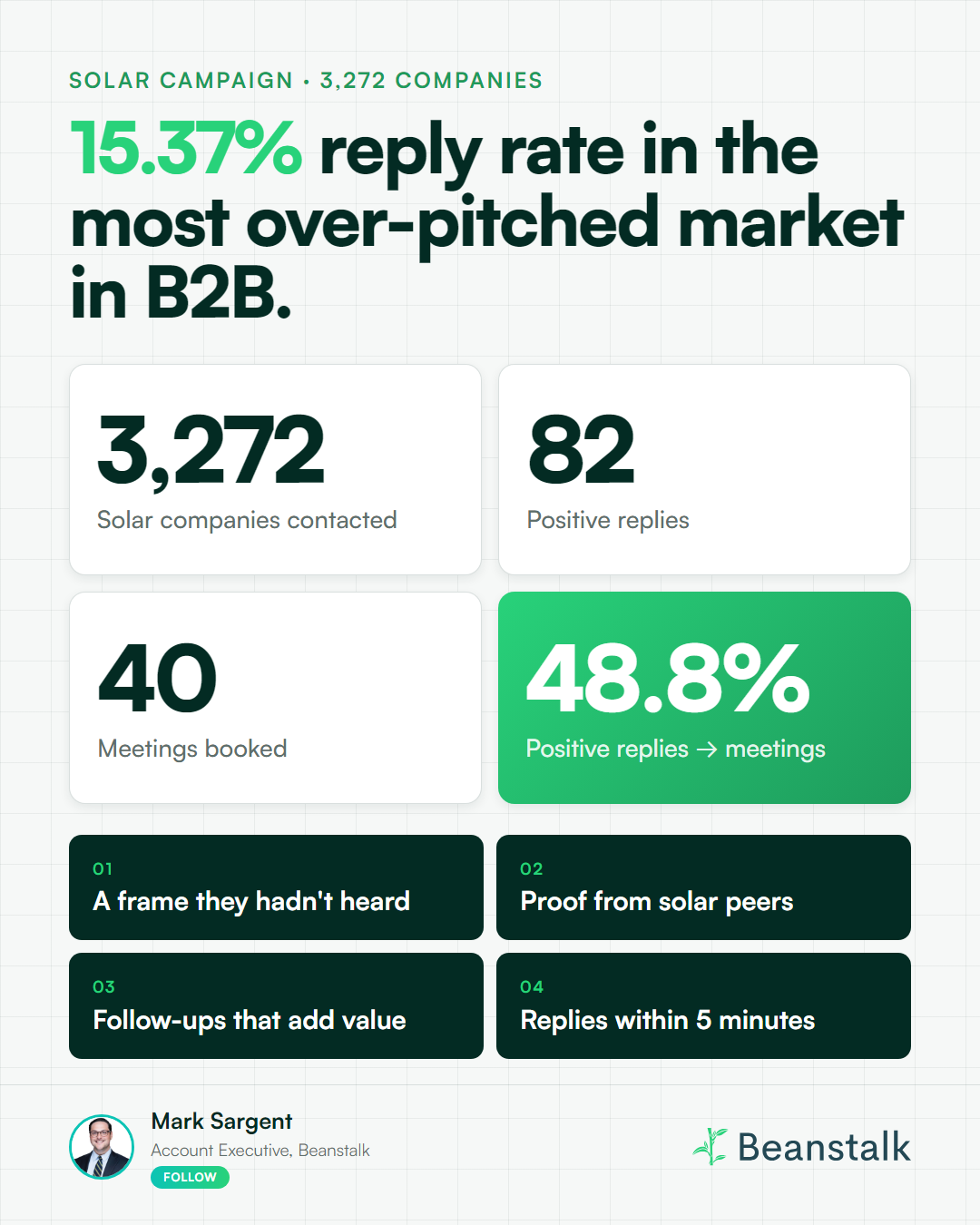
3,272 solar companies. 15.37% replied. 40 booked meetings.

That's for a client selling lead gen into solar, which might be the most over-pitched market in B2B. Every installer gets a "we'll send you solar leads" email every week, and most of them get deleted on sight.

Here's what got them to reply:

→ A frame they hadn't heard. Every competitor opens with the same line. We positioned the offer in a way that didn't sound like the hundredth pitch that month.

→ Proof from their own world. Every email included results from solar companies like theirs. That answers "why me?" before they ask it.

→ Follow-ups that add something. Zero "bumping this to the top of your inbox." Each follow-up gave them a new reason to reply.

→ 5-minute replies. When someone raised their hand, they heard back within 5 minutes.

The result:
- 15.37% reply rate
- 82 positive replies
- 40 meetings booked
- 48.8% of positive replies turned into a meeting

A crowded market usually means everyone is saying the same thing. That's an opening.

What's the most over-pitched market you sell into?
Wed 10/21MARK82 positive replies, 40 meetings: when does your team answer?LinkedIn pollLINKEDIN POLL · NO IMAGEDRAFTED
Post text + visuals
82 positive replies turned into 40 booked meetings. That's 48.8%.

On a solar campaign we answered every interested reply within 5 minutes.

A positive reply has a shelf life. Right now the prospect is in their inbox, thinking about the problem. An hour later they're in a meeting. Tomorrow they've half forgotten they replied.

Most teams spend weeks on the list, the copy and the infrastructure. Then the reply sits in a shared inbox overnight.

Be honest in the poll 👇

SET UP IN LINKEDIN

LINKEDIN POLL (use LinkedIn's "Create a poll" option, no image)
Question: Someone replies "interested" to your cold email. When does your team answer?
Option 1: Within 5 minutes
Option 2: Within the hour
Option 3: Same day
Option 4: Next day or later
Poll duration: 1 week
Fri 10/23MARK10 contacts, 10 times paying for the same researchText + comparison cardDRAFTED
Post text + visuals
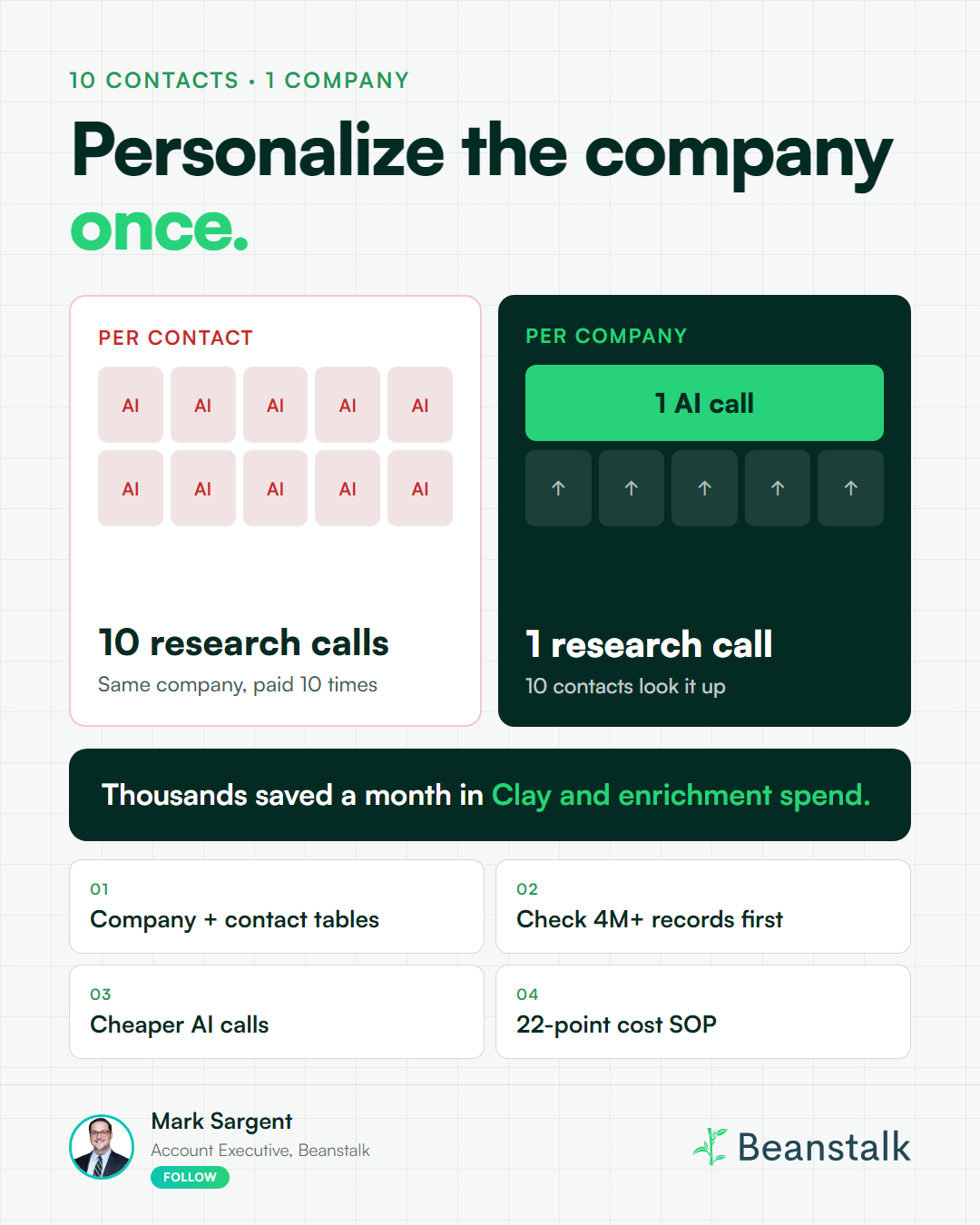
10 contacts at one company. 10 times paying for the same research.

1 would have been enough.

That's one of the quiet ways enrichment costs blow up once you're sending tens of thousands of emails a day.

Here's how we keep it down on a PR agency campaign running at that volume:

→ Companies and contacts live in separate tables. Each company gets personalized once, and every contact at that company looks it up.

→ Check the database first. We keep 4M+ enriched records in RevyOps. If we already have it, we don't pay for it again.

→ Cheaper AI calls. AI enrichments in Clay run through OpenRouter instead of going straight to the OpenAI API.

→ A 22-point SOP. Every GTM engineer follows the same cost checklist on every campaign.

That saves thousands of dollars a month in Clay and enrichment spend.

The data quality bar doesn't move, though. At this volume, one bad batch of contacts means spam complaints and burned infrastructure. Every email still gets found through a waterfall of providers and verified before it sends.

How many times did you pay for the same company research last month?

Week 2 · Oct 26

Tue 10/27MARK$8M company, 4x EBITDA, sourced from a cold emailCarousel (6 slides)DRAFTED
Post text + visuals
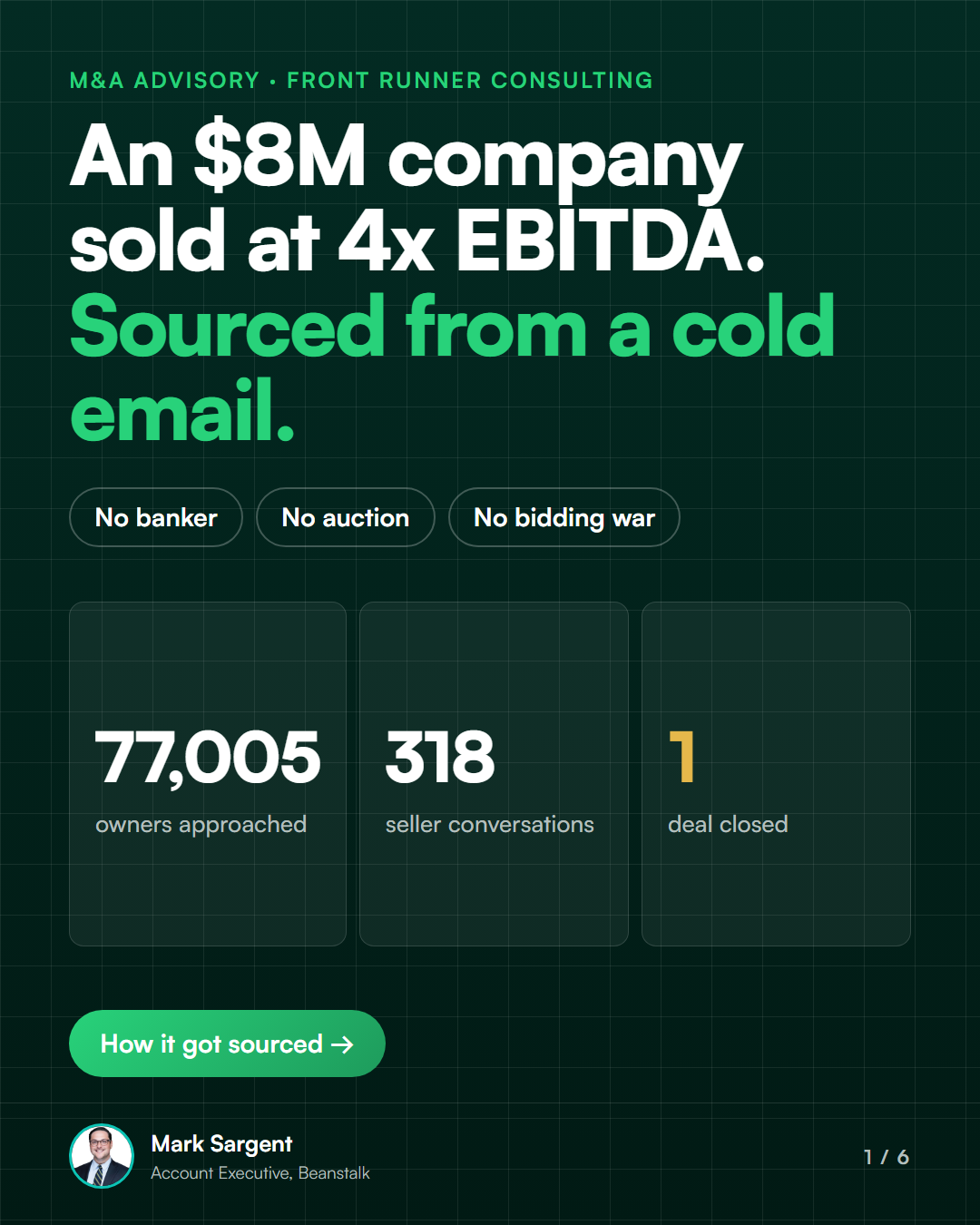
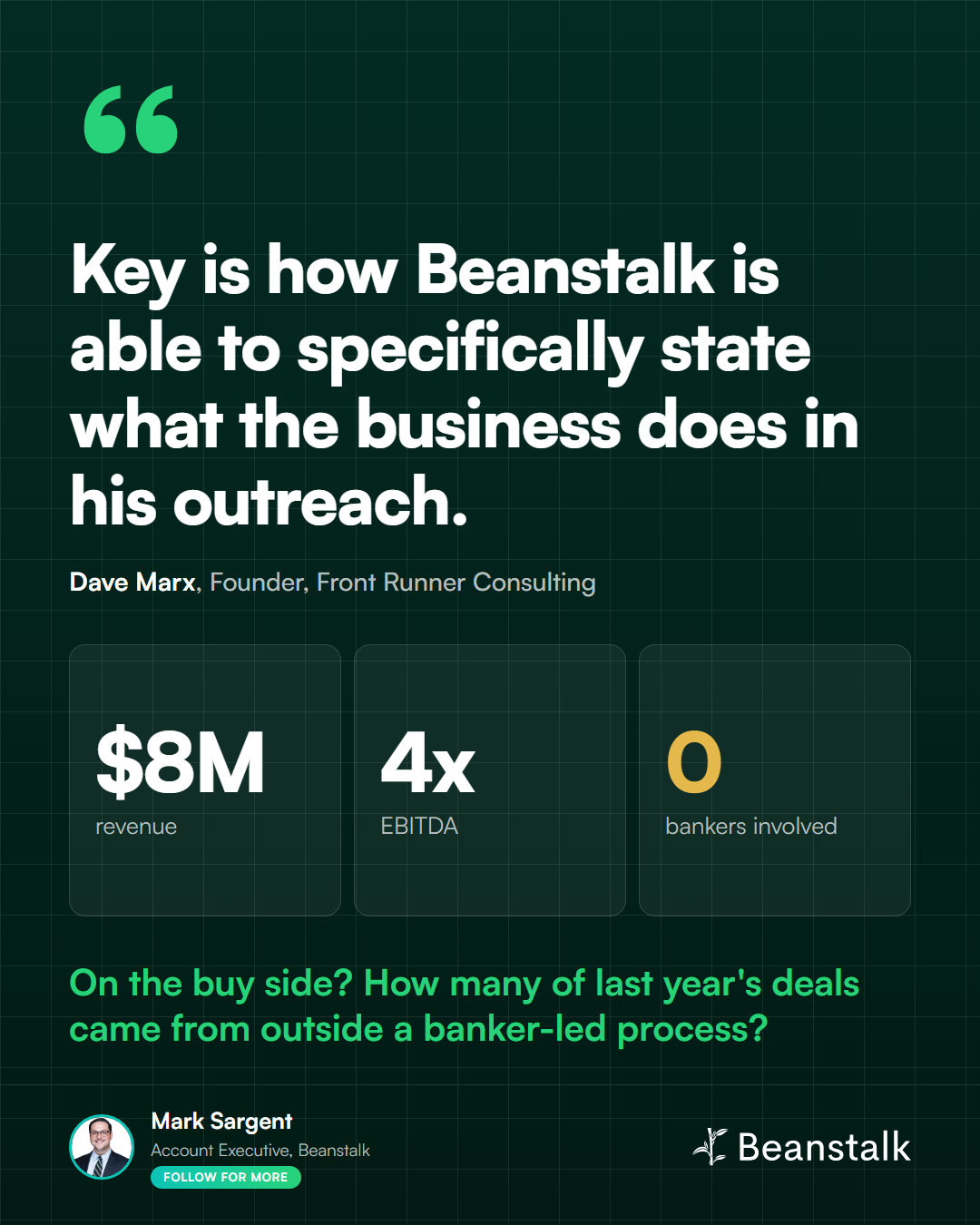
$8M in revenue. Sold at 4x EBITDA. Sourced from a cold email.

A freight brokerage sold to a strategic acquirer, and the seller first came in through cold outreach.

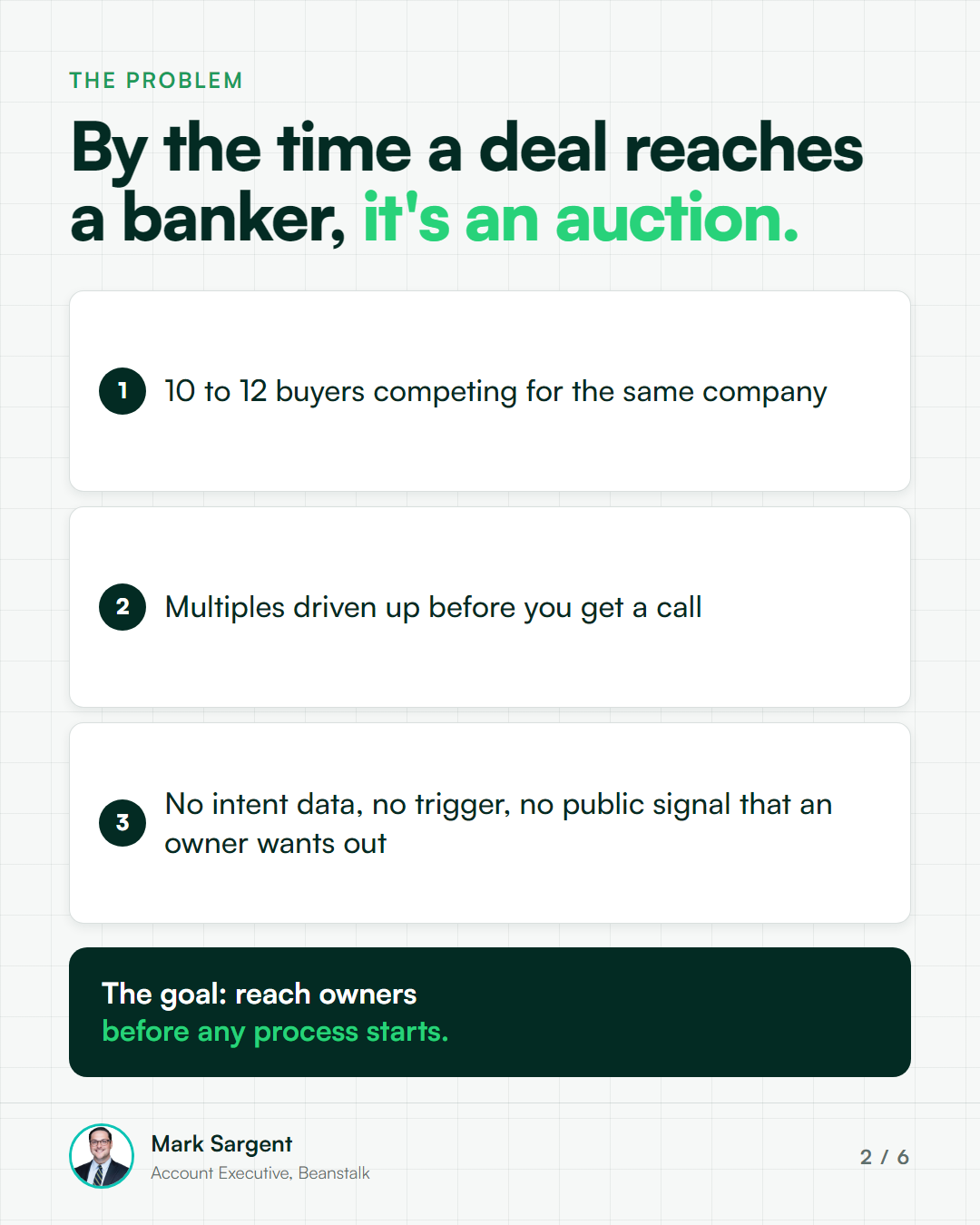
No banker. No auction. No 10 to 12 buyers bidding the multiple up.

Front Runner Consulting is a buy-side M&A intermediary with 18 years in the market. Dave Marx had never used a lead gen firm before working with us.

Here's how that deal got sourced:

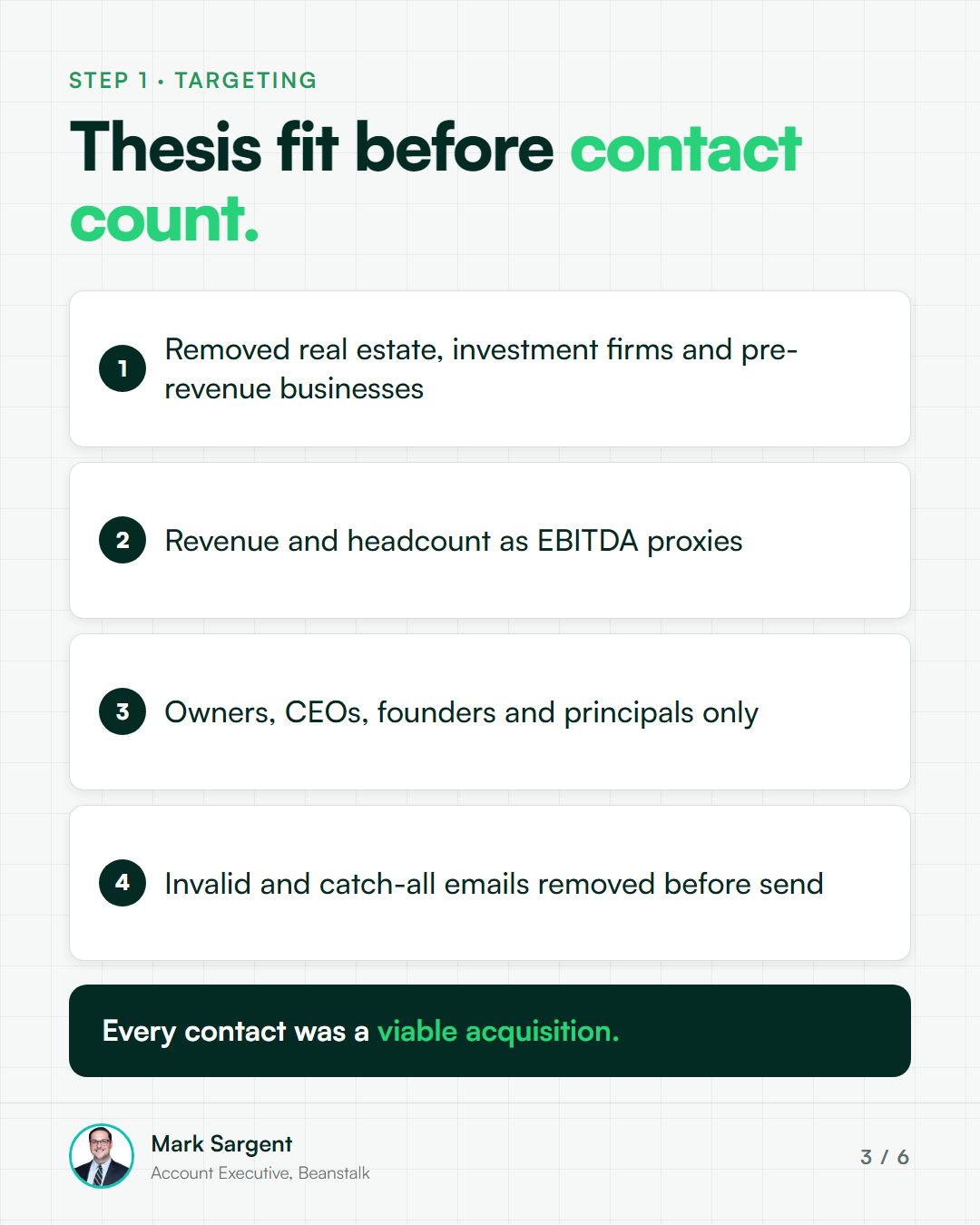
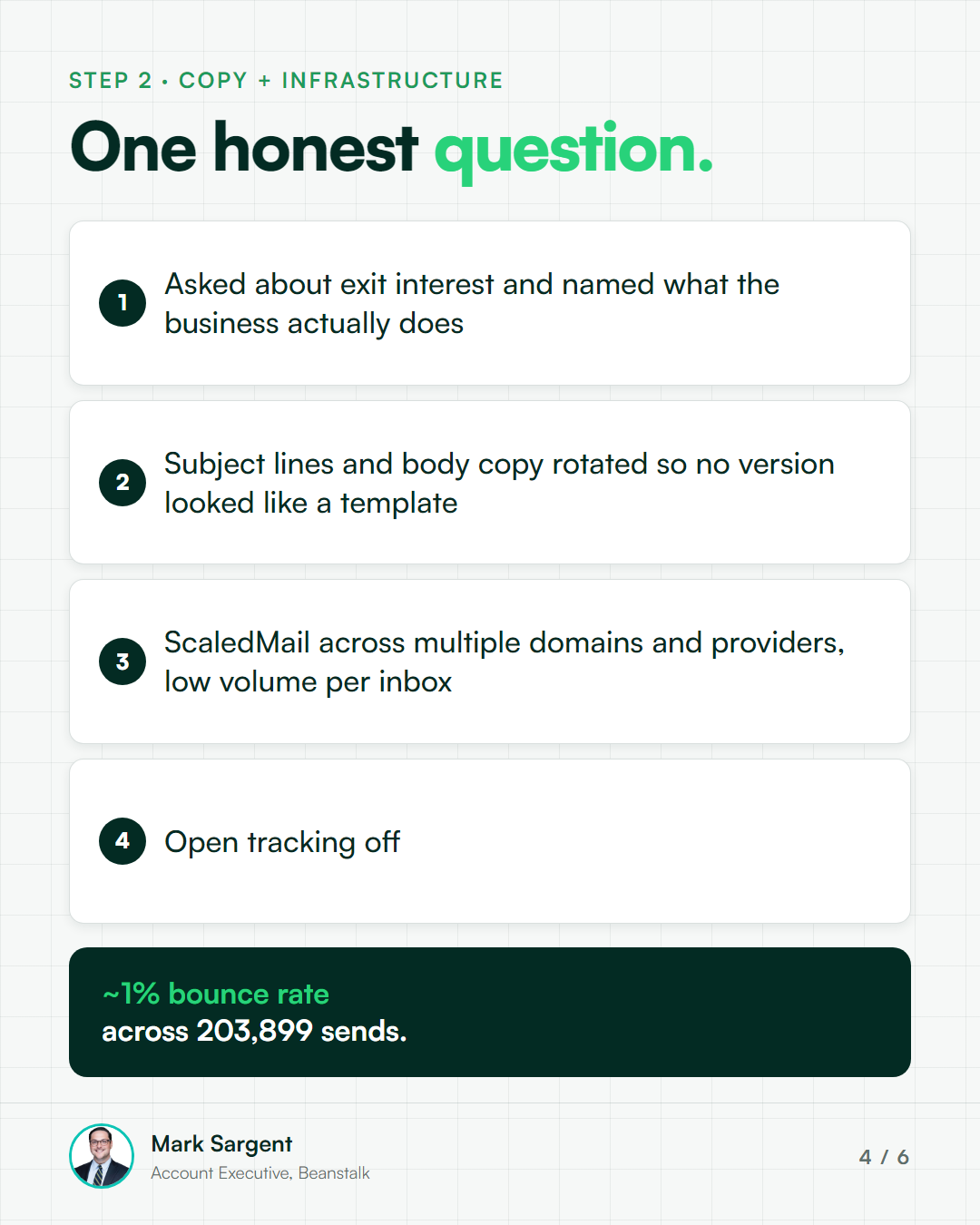
→ Lists built on thesis fit. Real estate, investment firms and pre-revenue businesses were removed before a single send. Revenue and headcount stood in for EBITDA. Owners, CEOs, founders and principals only.

→ One honest question per email. Is there any interest in an exit, plus a line on what the business actually does.

→ Infrastructure that could take the volume. 203,899 sends through ScaledMail, low volume per inbox, open tracking off. Bounce rate stayed around 1%.

The numbers:
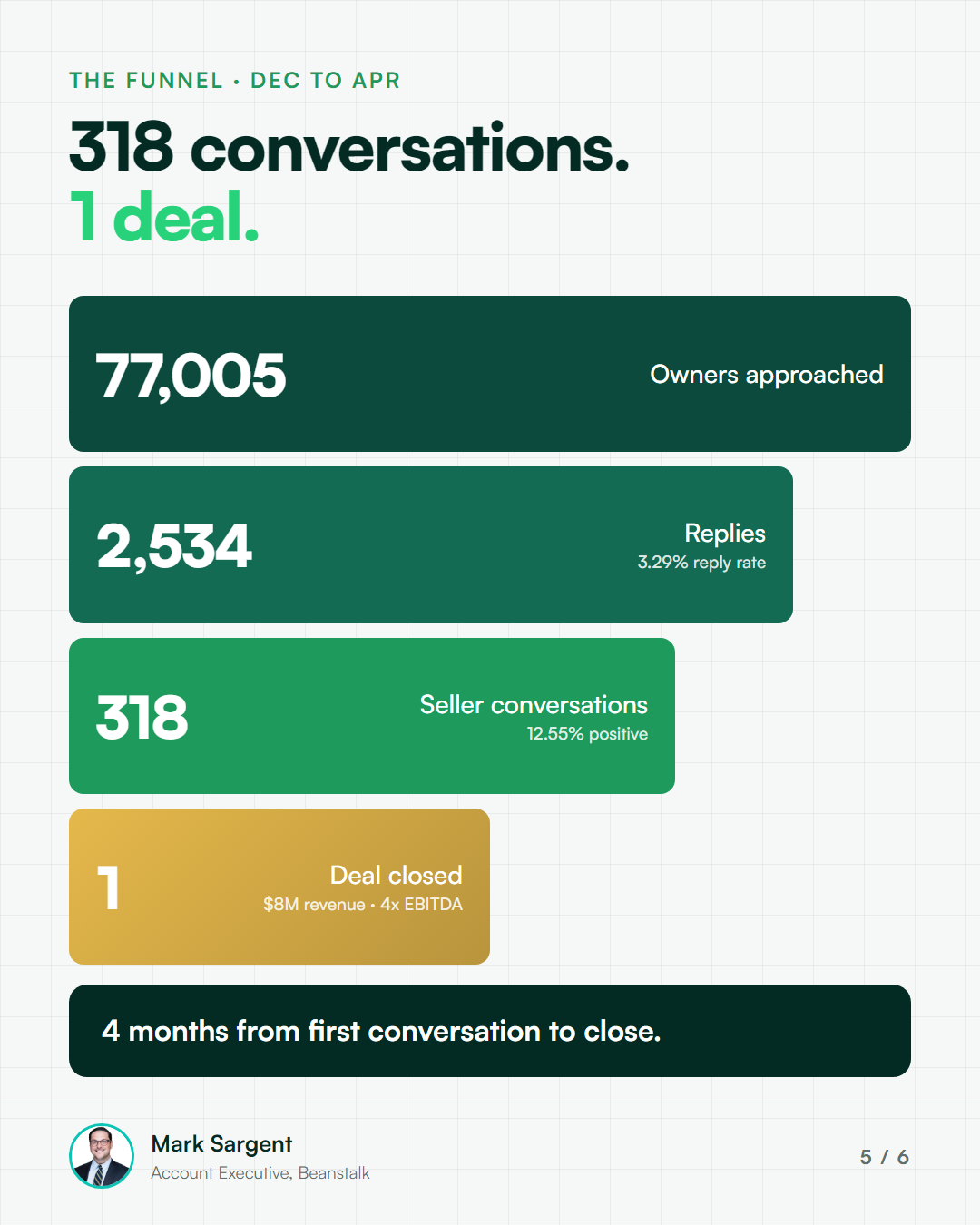
- 77,005 owners approached
- 2,534 replies
- 318 seller conversations (12.55% positive reply rate)
- 1 closed deal, 4 months from first conversation to close

In Dave's world, one closed deal makes it a good year. Each one is worth six figures in fees.

318 conversations for 1 close is the math working exactly as it should.

If you're on the buy side, how many of last year's deals came from outside a banker-led process?
Thu 10/29MARK$187.9K closed, 86 deals, 60 daysText + cardDRAFTED
Post text + visuals
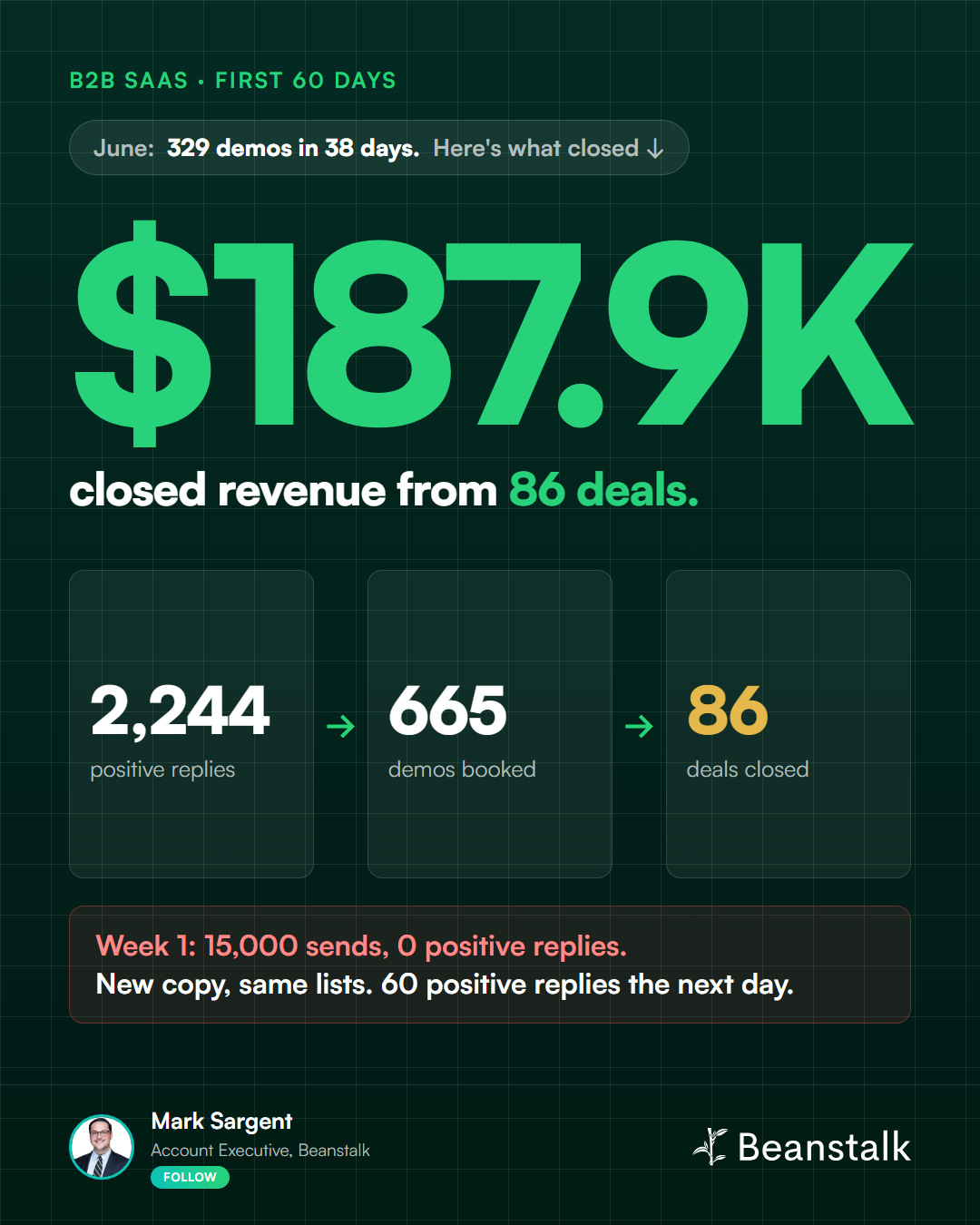
$187.9K closed. 86 deals. 60 days.

Back in June I posted 329 demos in 38 days for this B2B SaaS client. Demos are nice. Closed deals pay the bills.

Here's the full first 60 days:
- 2,244 positive replies
- 665 demos booked
- 86 deals closed (60 in May, 26 in June)
- $187.9K in revenue

The part I keep coming back to:

The first broad campaign sent 15,000 emails and got 0 positive replies.

Same lists, same infrastructure. We rewrote only the copy, and 60 positive replies came in the next day.

If anyone had judged the channel on those first 15,000 sends, none of those 86 deals would exist.

It also launched 72 hours after the contract was signed. The 5,000+ inboxes were already warm, so there was no ramp-up to wait through.

What's the earliest you've ever pulled the plug on a campaign?

Week 3 · Nov 2

Mon 11/2MARK67 seller conversations in 25 days: disqualifier in email #1Text + cardDRAFTED
Post text + visuals
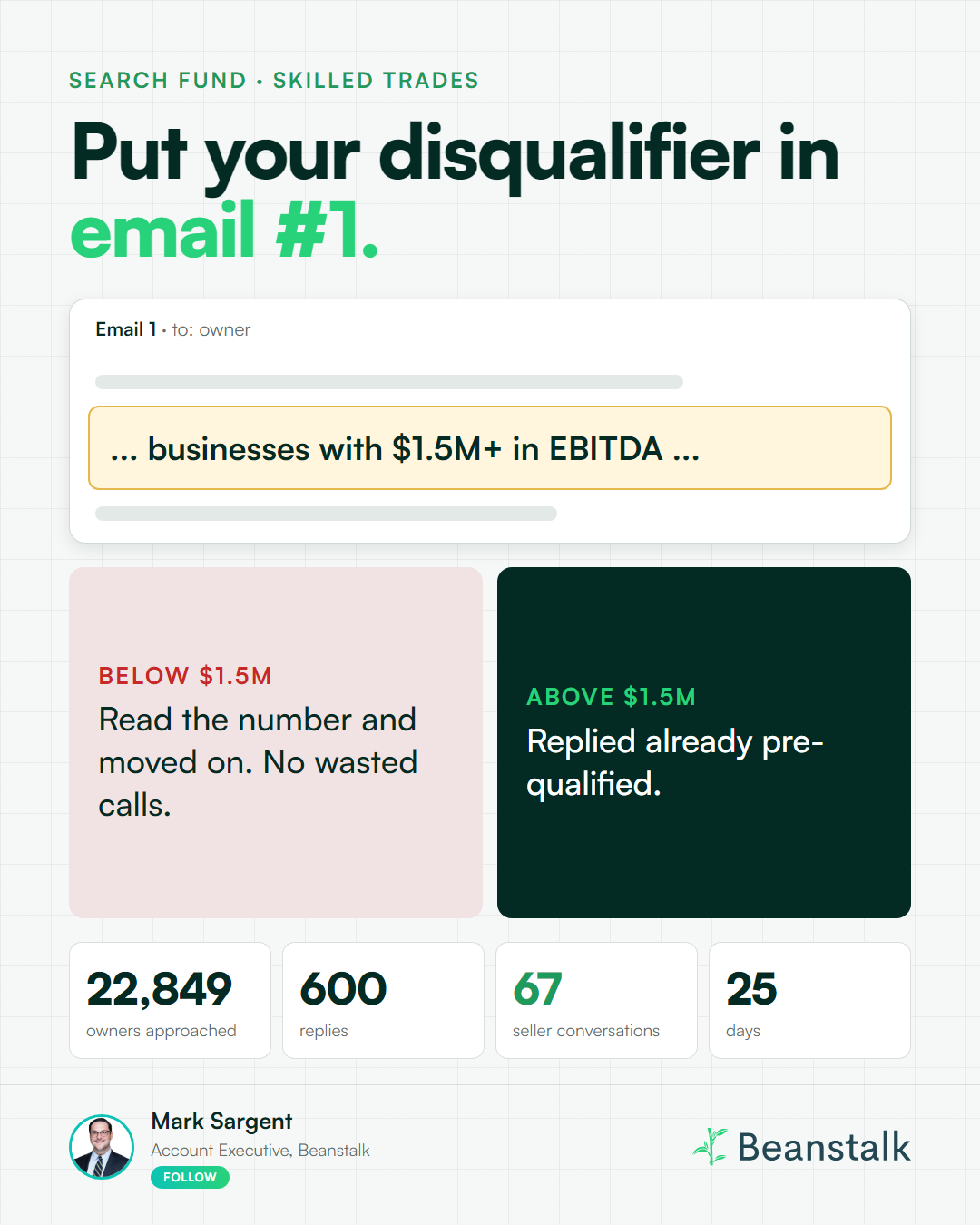
67 seller conversations in 25 days for a buyer nobody had heard of.

The client is a search fund operator. One person looking to buy one skilled trades business and run it long-term. No firm name, no portfolio, no brand to open with.

Most outbound is written to get as many replies as possible.

This campaign was written to filter in email #1.

→ The $1.5M EBITDA floor was stated in the first email.

Owners below it read the number and moved on. They never replied, never took a call, never ate up his week.

So every positive reply was pre-qualified before anyone got on the phone.

The rest of the build:
→ Lists from Google Maps and Google search. Trades owners barely use LinkedIn, and Apollo and ZoomInfo only cover part of that market.
→ An AI agent checked every company website against his criteria before a single enrichment credit was spent.
→ PE-owned, franchise, roll-up and public companies removed at the list level.
→ Copy that led with his story. One angle opened with his Marine Corps and PE background. The other opened with protecting the owner's team and legacy.

22,849 owners approached.
600 replies.
67 seller conversations.
11.17% positive reply rate.

What qualifier are you saving for the discovery call that could go in your first email?
Wed 11/4MARK342 positive replies in 72 hoursMulti-image (3)DRAFTED
Post text + visuals
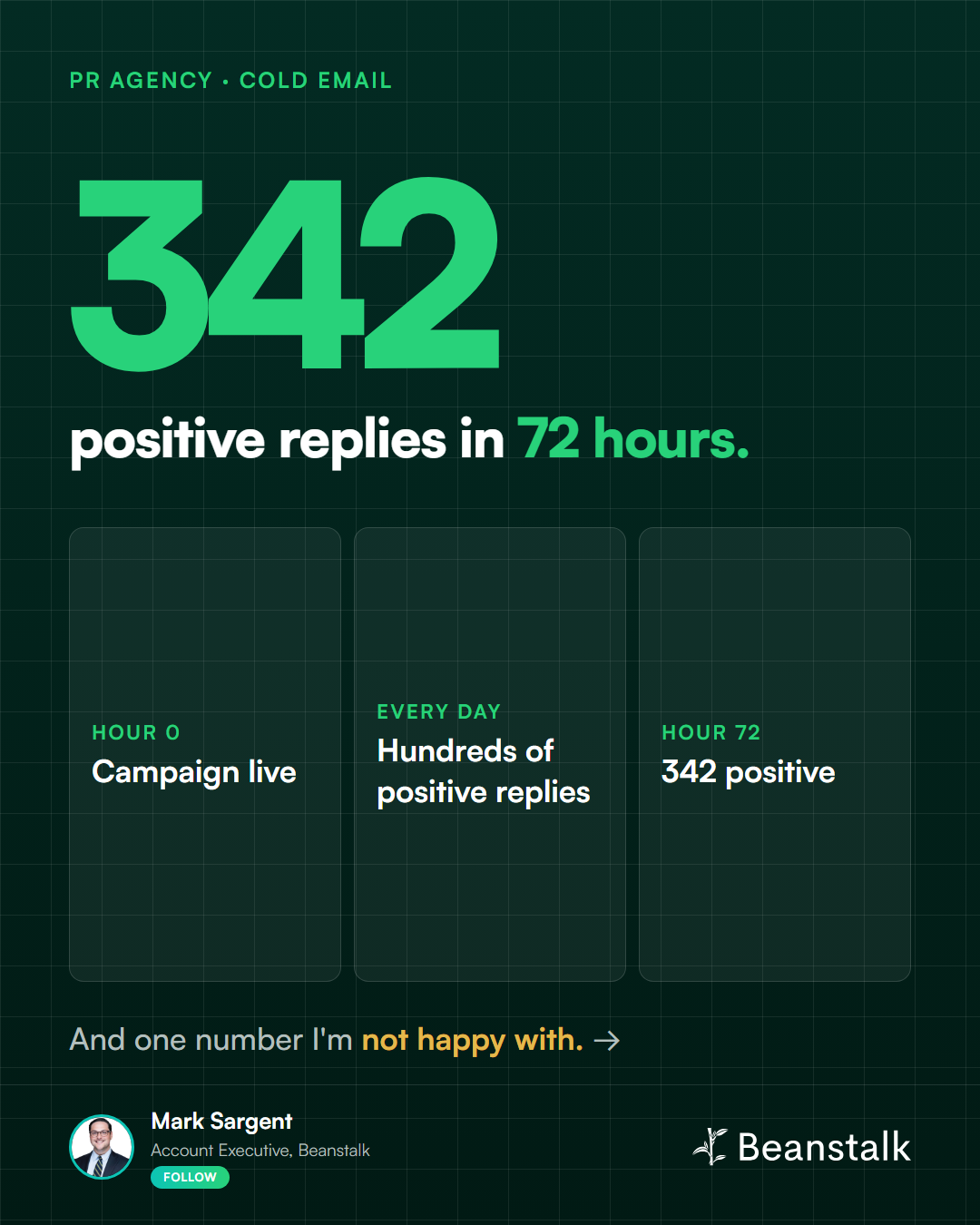
342 positive replies in 72 hours for a PR agency.

And one number in that campaign I'm not happy with.

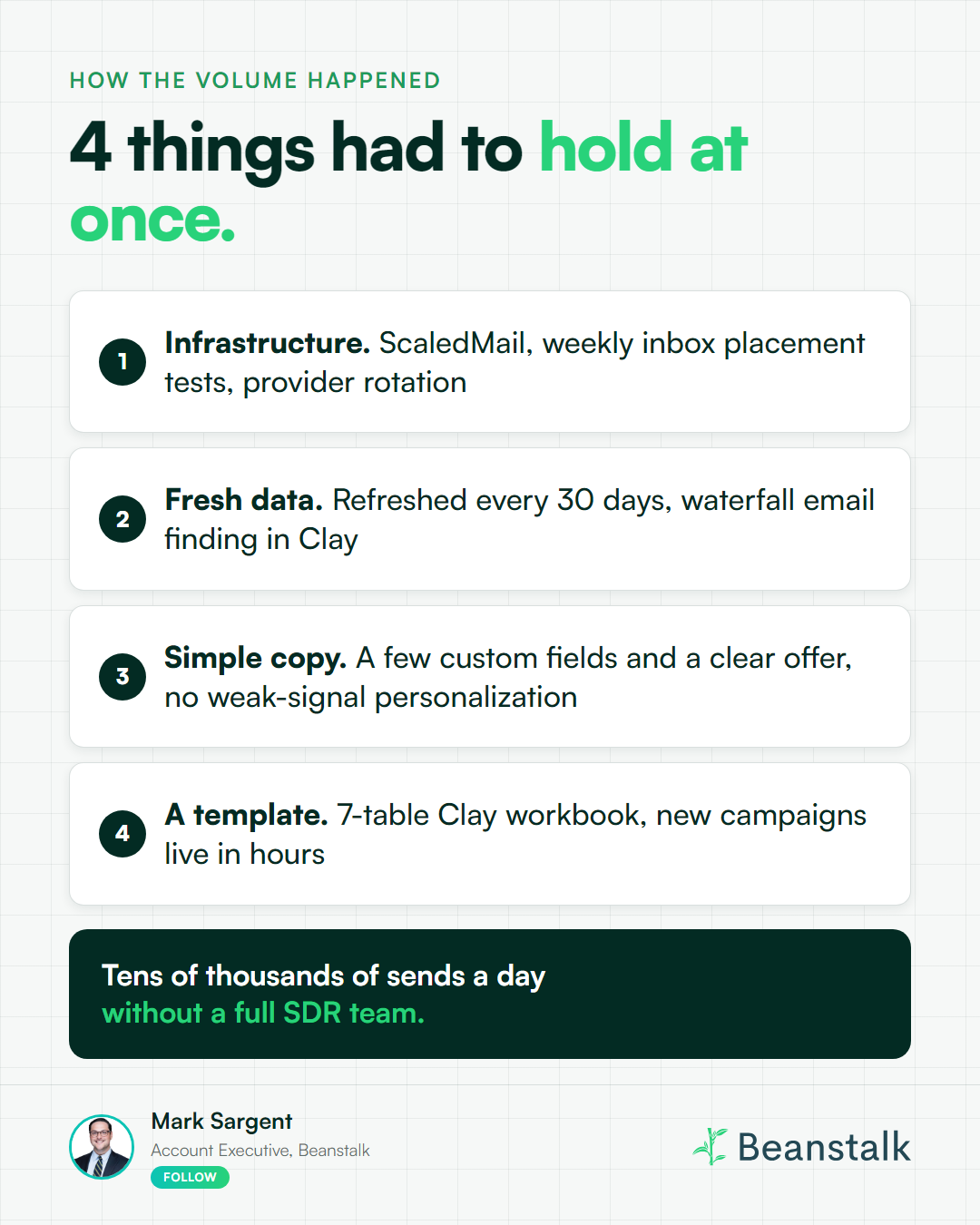
First, how the volume happened:

→ Infrastructure on ScaledMail. Weekly inbox placement tests, multiple domains, provider rotation.
→ Fresh data. Contacts refreshed every 30 days, emails found through a waterfall of providers in Clay.
→ Simple copy. A few custom fields and a clear offer. No scraped LinkedIn posts, no personalization built on weak signals.
→ A 7-table Clay template, so a new campaign launches in hours.

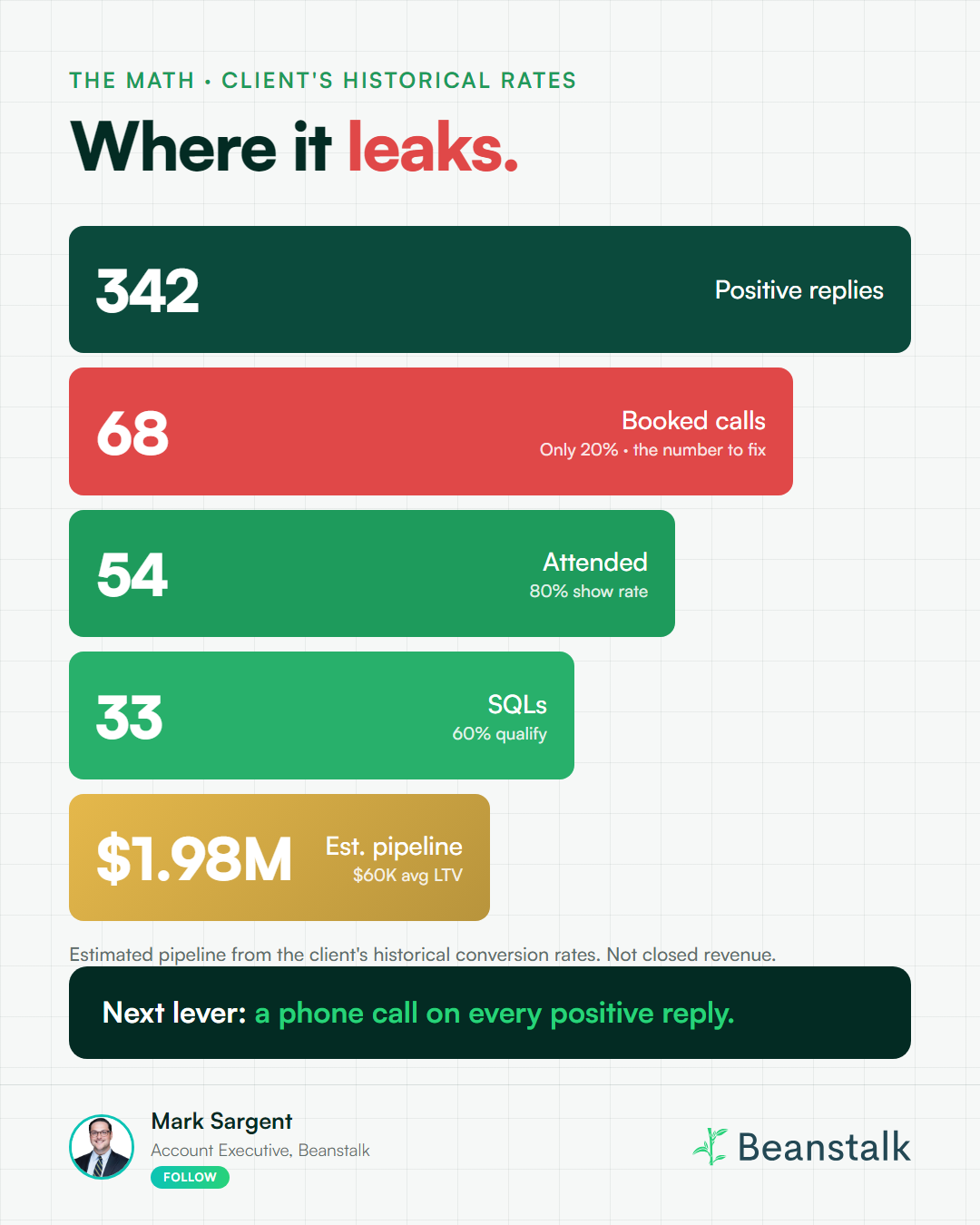
Now the math, using the client's own historical rates:

342 positive replies
→ 20% book a call = 68 calls
→ 80% show up = 54 attended
→ 60% qualify = 33 SQLs
→ $60K average customer LTV = an estimated $1.98M in qualified pipeline

That's estimated pipeline. Nothing here is claimed as closed.

The number I'm not happy with is the 20%.

Only 1 in 5 positive replies became a booked call. Our inbox team answers within 15 minutes, and the biggest jumps we've seen come from adding a phone call on top of the email reply. That's the next lever on this one.

What's your positive-reply-to-booked-call rate right now?
Fri 11/6MARK29,954 replies, reps only saw 2,244Carousel (6 slides)DRAFTED
Post text + visuals
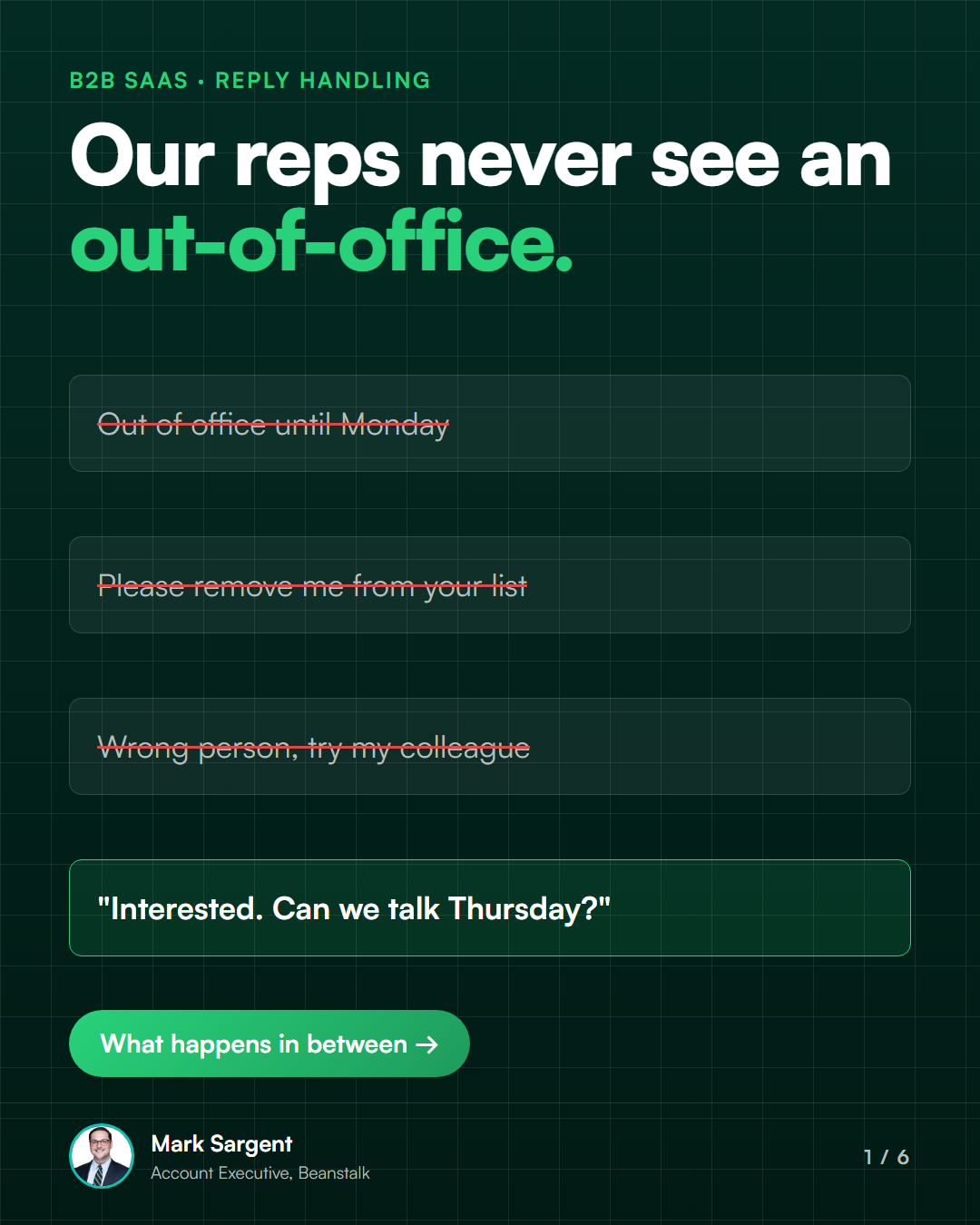
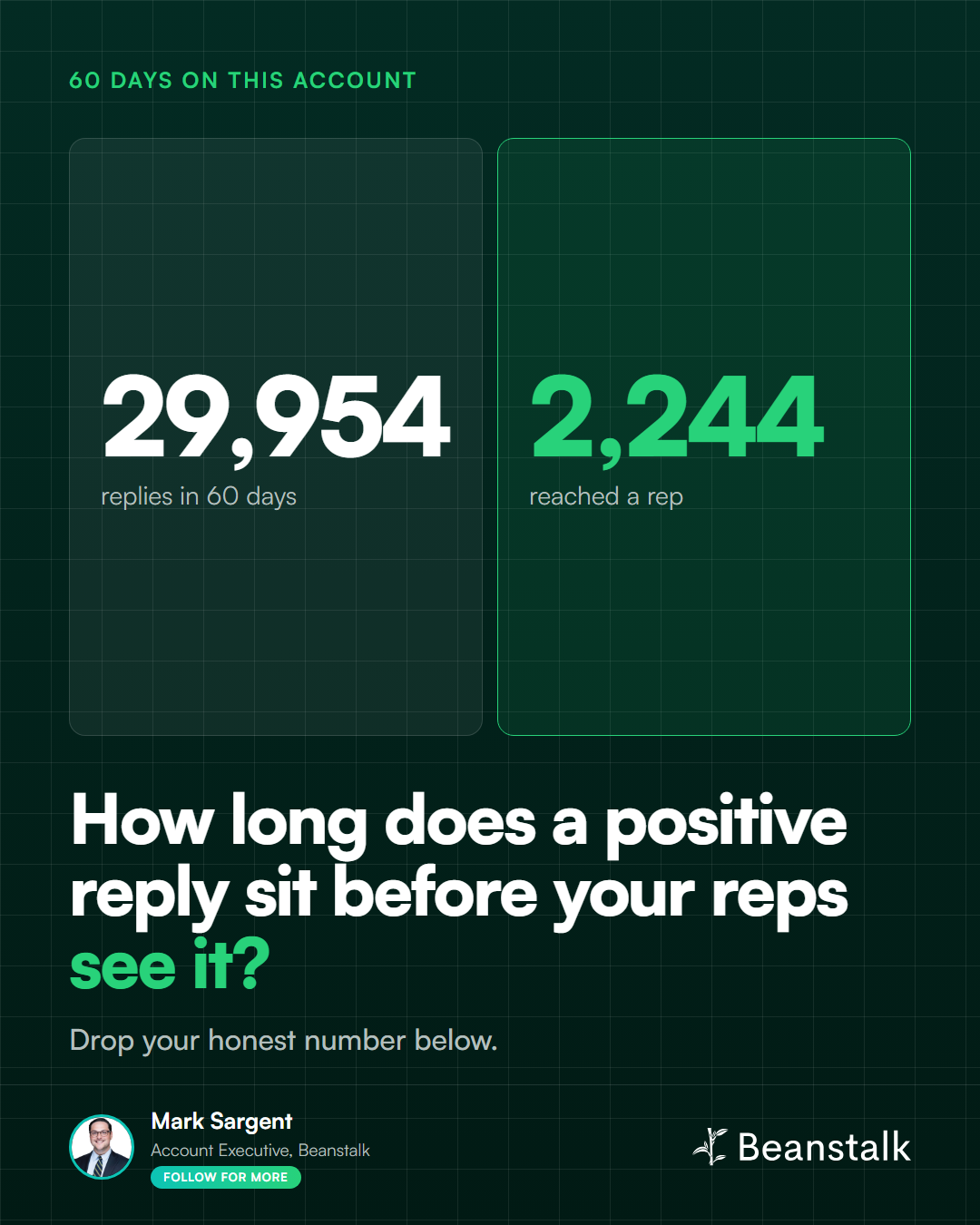
29,954 replies in 60 days. Our SDRs only had to look at 2,244 of them.

That's a SaaS account of ours. The out-of-offices, the unsubscribes and the "wrong person, try my colleague" never reach a rep.

Here's what happens between a reply landing and a rep picking up the phone:

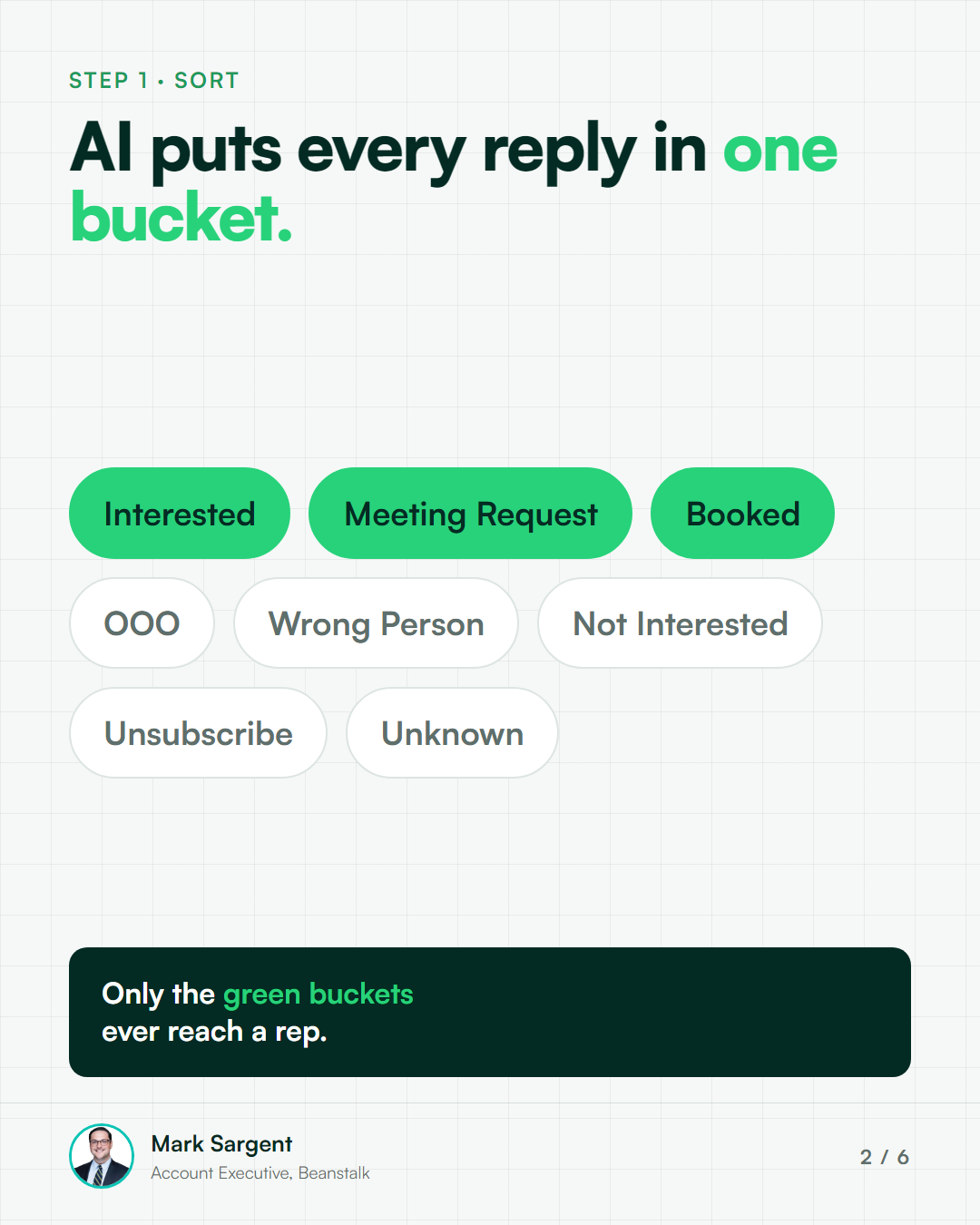
1. AI sorts every reply into one category. Interested, Meeting Request, Booked, OOO, Wrong Person, Not Interested, Unsubscribe or Unknown.

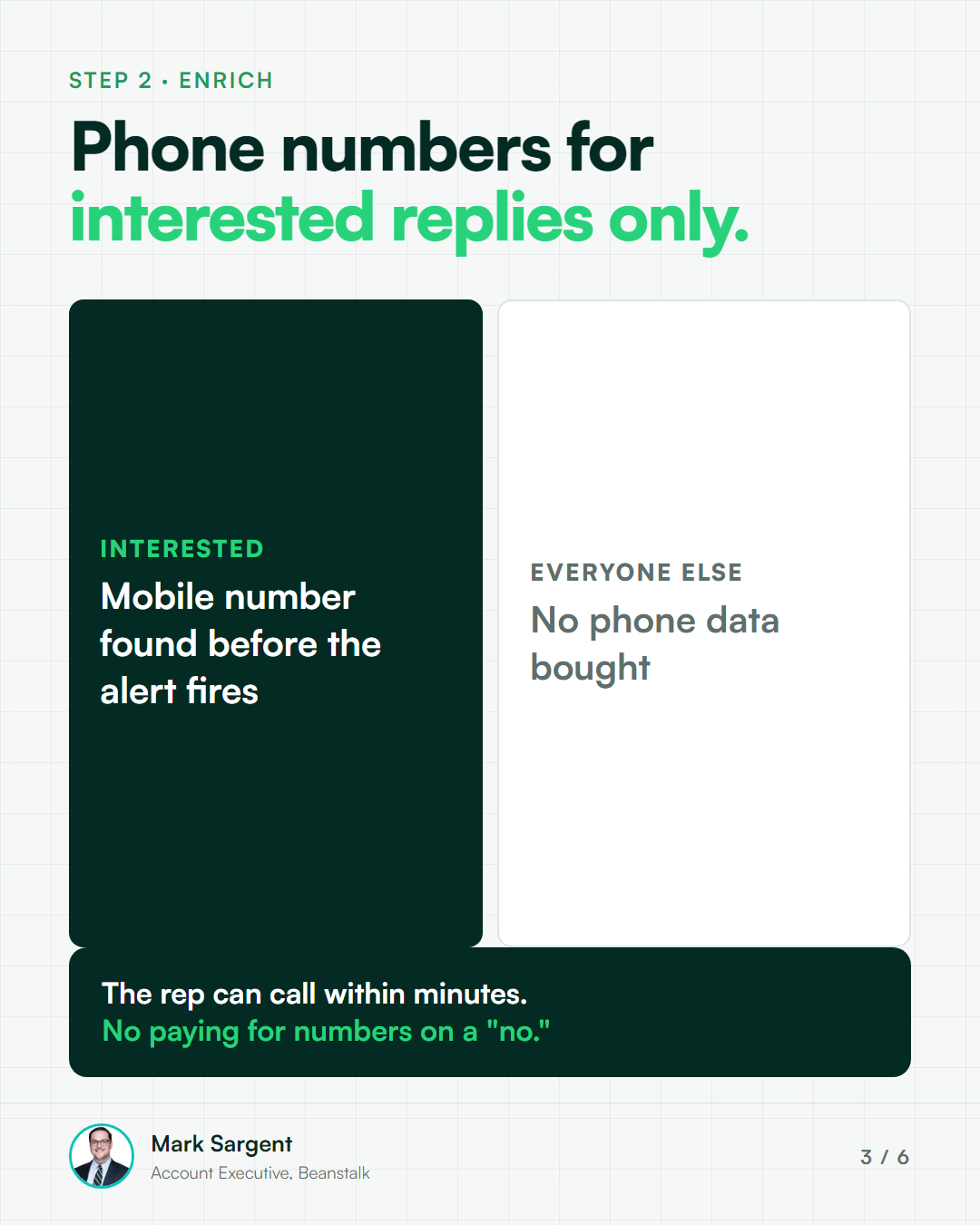
2. Only interested replies get a mobile number. No paying for phone data on people who said no.

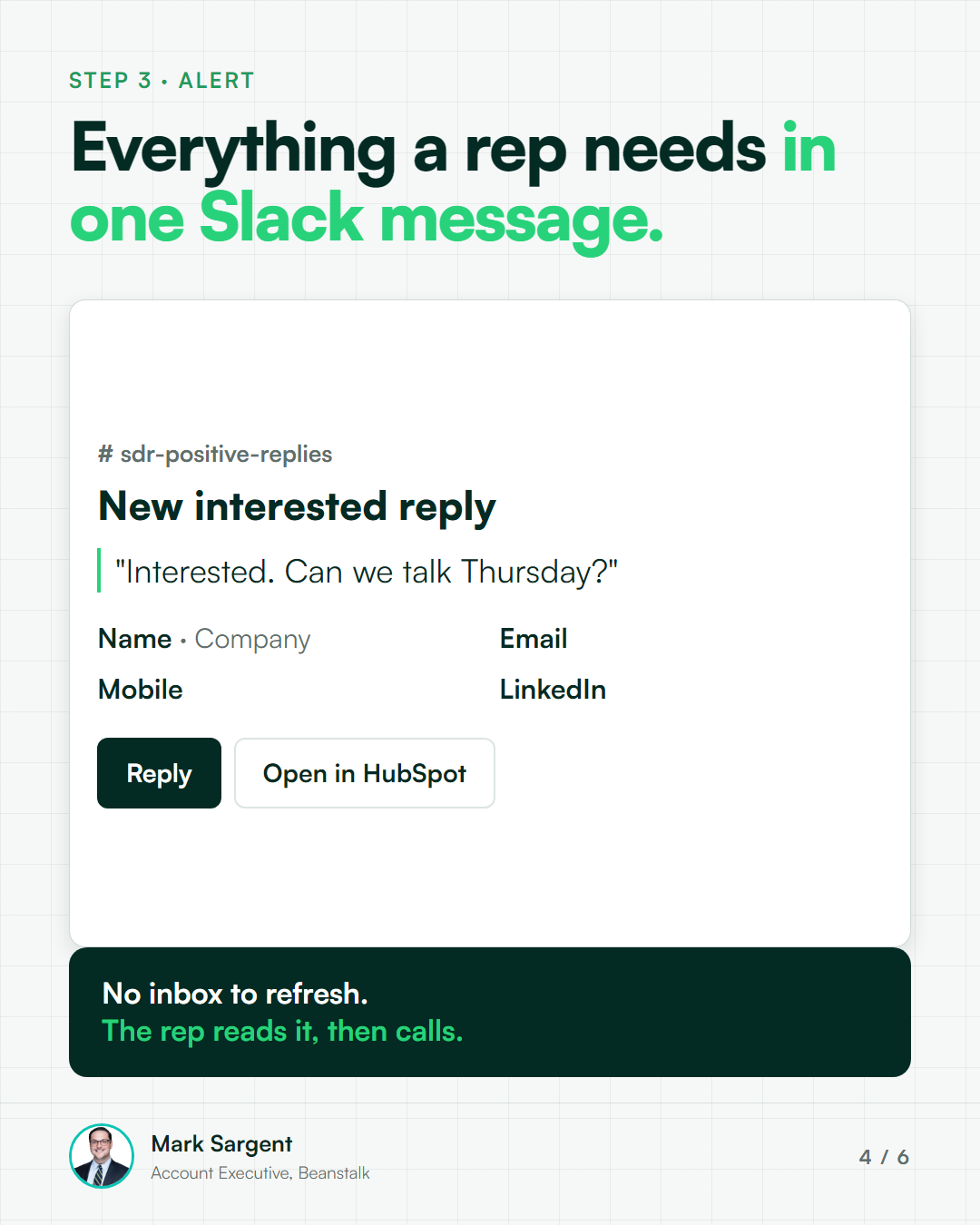
3. A Slack alert fires with the name, company, reply, email, phone, LinkedIn and a CRM link. One button to reply, one to open the HubSpot record.

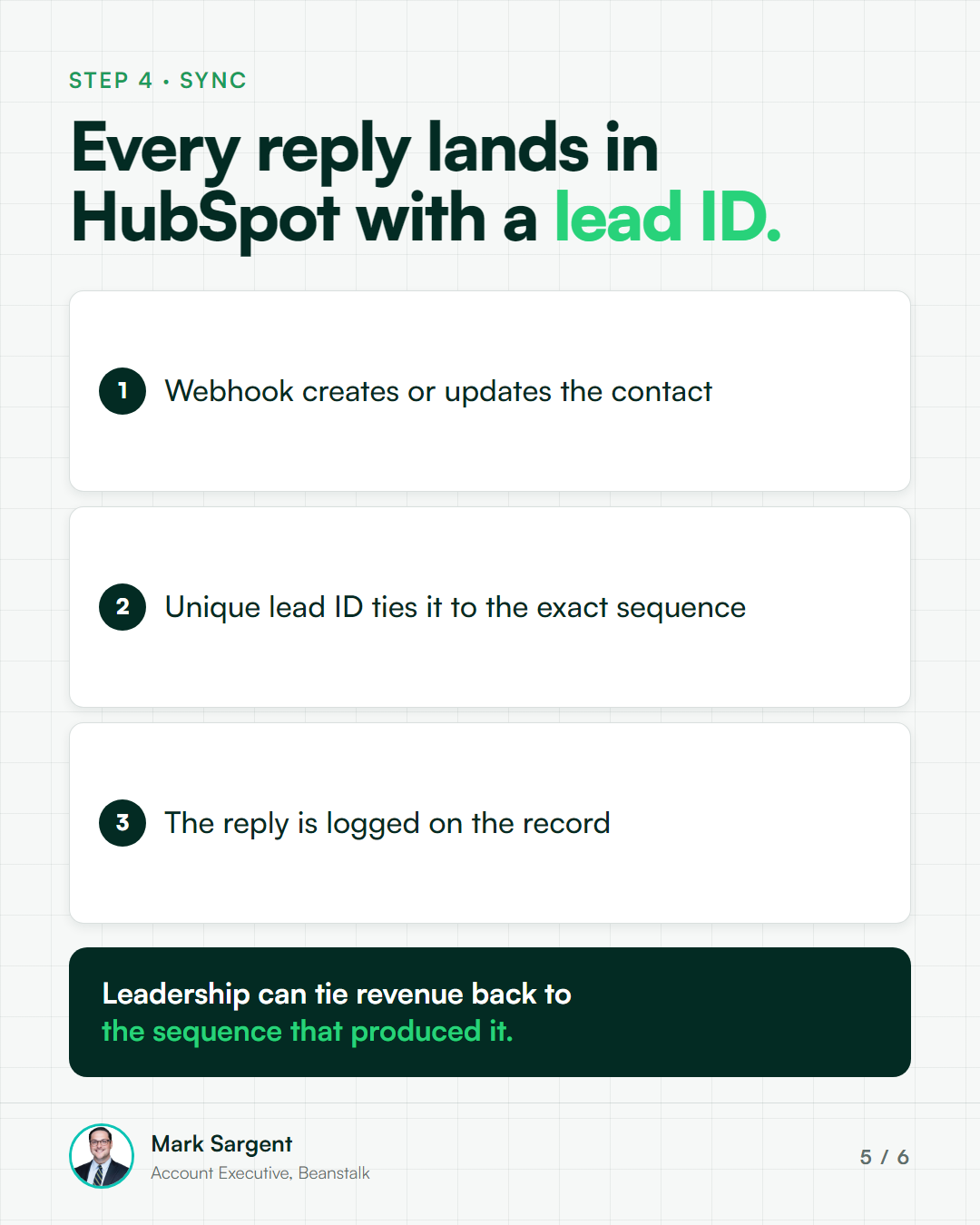
4. A webhook syncs it to HubSpot with a unique lead ID, so leadership can tie revenue back to the exact sequence that produced it.

That volume is the whole point.

Reading every one of those by hand is a full-time job before anyone makes a single call.

How long does a positive reply sit before your reps see it?